Showing posts with label landscaping. Show all posts

Tuesday, October 13, 2015

Passing On Garden Center Savings

Nothing leaves a lasting impression like a first impression. So, what is someone’s first impression of your home?
Now that the weather is a little cooler it's the perfect time to spruce up your homes curb appeal. Thinking about planting, seeding, or any other landscaping this fall? Check out the deals at Broccolo Garden Center first. 
From seeds to trees and everything in between Broccolo Garden Center has all of the necessary goods and services to transform your yard into a beautiful oasis. If you are just getting started their knowledge and recommendations are second to none. Even an experienced gardener can pick up tips and get inspired by creative planting schemes.

Here are 4 more really good reasons to visit the garden center:
1. An amazing Barn Sale that includes 50% savings on planters, baskets, and loads of quality garden supplies. 
2. 25% off all shrubs and perennials. October is a perfect time to plant.
3. When you buy a tree, they'll plant it free!

Take the first step and visit Broccolo Garden Center today. Tell them your friends at Faber sent you. Faber Homes does not have any affiliation with Broccolo Garden Center. We just want to share the savings with you!

Thursday, July 23, 2015

You Can’t Kill It: Flowers


We discussed perennials a couple weeks ago, but this week we’re focusing on annuals – for those of us who like to mix it up year after year.

Zinnia
You can find Zinnias in nearly any color (except blue), and in a variety of heights. They work well in pots, planters, or in the ground, and can be planted in direct sunlight.

Marigolds
They’re super tough to kill, and they’ll brighten up any garden, planter or pot all summer long – because they just keep blooming. Some varieties of marigolds will grow as tall as 5 feet, but most variations are more compact.

Begonias
These tough cookies are often found in hanging baskets or in garden beds. Begonias will grow in sun or shade, and with just a little water, they will continue to grow and bloom through summer.

Snapdragons
A childhood favorite for many, snapdragons will bring butterflies to your garden at little labor-cost to you. In healthy environments, Snapdragons will grow tall and lush, making them strong and able to stand up to harsh weather conditions in the spring and fall.

Photo Cred: enkivillage.com 

Cosmos
Don’t have the best soil in your garden? Never fear. Cosmos are here! Cosmos flowers grow from seeds and can tolerate drought once they are up and growing (so all you have to do is water them to that point).

So now you have a list of annuals, perennials, shrubs and trees that you cannot kill. Which ones will you plant this year?

You Can’t Kill It: Trees


You need them for shade and even perhaps privacy. They add a certain aesthetic to your home, and a little bit of personality… but you just haven’t been able to keep one alive long enough to enjoy these benefits. We’re talking about trees of course. So which ones can you plant that won’t require a ton of TLC? Here are a few to start with.

American Hornbeam
This low-maintenance tree thrives in the shade of other trees, so if your yard backs up to other trees or greenery, it’s a fabulous choice to lend some shade to your yard. The American Hornbeam has thin bark with a muscled appearance and maintains a beautiful look in the winter months. In the fall, leaf colors will turn to beautiful shads of yellow, red and orange. It will grow to about 20 feet tall by 40 feet wide.

Bur Oak
A classic tree in the Northeast, the Bur Oak requires little maintenance. Acorns grow from this tall tree (80 feet!) and can be as large as 2 inches long. Perfect for large yards, if growing out in the open where roots can spread, the Bur Oak can grow as wide as it is tall.

Hackberry
A relative of the elm tree, the Hackberry takes similar form. They don’t require much attention, and soon grow and spread, providing excellent shade in your yard. They do also yield berry-like fruit in the late summer months, which welcome birds of many kinds. This tree will grow between 40 and 60 feet high by 40 to 50 feet wide.

Snowdance Japanese Tree Lilac
Growing as tall as 18 feet and 20 feet wide, the Snowdance Japanese Lilac Tree boasts a massive canopy that grows wider than it does in height. You’ll notice a lovely fragrance in the early summer months, which then fades, while still providing shade through lush green leaves. 

Photo Cred: pixgood.com

Northern Catalpa
If you’re looking for a taller tree that blooms, the Northern Catalpa is the tree for you. It’s flowering blooms show in the early summer months, which then turn into cigar-like pods. It is because of these pods that the tree has inherited the name “cigar tree.” The tree grows well in urban settings, and can grow as tall as 60 feet (and 40 feet wide). Just don’t plant it near water features or pools in your yard, as the pods do shed a bit.

You Can’t Kill It: Perennials


We left off last week with a list of our favorite shrubs that even if you tried very hard, you’d have a difficult time killing. To compliment your favorite shrub choice, we’ve compiled a list of some beautiful perennials that you will have a hard time destroying.

Ostrich Fern
Named after its appearance, which highly resembles the feathery tail of an ostrich, the Ostrich Fern spreads aggressively, making it perfect for spaces in need of ground cover.

Hosta
Perfect in dry soil, the hosta is a classic perennial that will turn any garden from drab into fab. Every year you’ll be rewarded with a fuller, more lush plant that yields white flowers in the peak of summer. For a little dimension, we recommend selecting the “Gold Standard” Hosta variety, as it boasts light green leaves with darker green edges.

Perry’s Blue Siberian Iris
A stunning purple flower that lasts as long as four weeks is what you can expect from this perennial. Perfect in full sun or part shade, the Perry’s Blue Siberian Iris will grow and bloom in just about any soil type. Dry soil? You’ll just have a shorter stem. Often paired with the Shasta Daisy, this flower is very hard to kill.

Shasta Daisy
She’s a classic, this beauty. The Shasta Daisy lives well in nearly any condition in any garden or yard. They require minimal water and only need your attention when blooms die off. Clipping spent blooms will extend the life of the daisy for months.

Photo Cred: ufseeds.com

Lily of the Valley
It’s true. This beautiful perennial can live a long, prosperous life in your garden. Ideal in mostly-shaded areas, Lily of the Valley perennials will bloom and make for lovely flowers in a vase.

If you’re in need of some shade for Lily of the Valley, stay tuned for next week’s blog on trees that you cannot kill.  

You Can’t Kill It: Shrubs


Roses from your significant other. Potted plants from your mother. It doesn’t matter. You kill everything with your not-so-green-thumb. It’s OK, you’re not alone. That’s why this month, we’re featuring a series of blogs on plants you cannot kill (or at least you’ll have a hard time killing them).

Don’t be “that house” on the street. Grab your gardening gloves and toss-around shoes. This week we’re featuring our favorite shrubs that you cannot kill.

Japanese Flowering Quince
Otherwise known as the “Pink Lady,” this flowering shrub gives your landscaping a blast of color, even into late winter. If you’re in need of a hedge and love colors like pink, coral, bright orange or even white, this shrub is perfect for your space. The flowering quince works well in wildlife gardens, so if your property backs up to trees, the dense interiors will provide great shelter for birds.

Black Beauty Elderberry
If high-contrast is what you’re hoping to achieve with your landscaping, the Black Beauty Elderberry might be the shrub for you. Its beautiful dark leaves are complimented with pink blooms which appear mid summer, followed by berries. You won’t want to eat the berries, however if you love birds, you’ll notice they’re drawn to these berries.

Rose Satin
More popularly known as a hibiscus, the Rose Satin brings beautiful, bold color through huge blooms in colors such as white, red, lavender and pink. If birds aren’t your cup of tea, but you prefer the likes of butterflies and hummingbirds, you’ll find they are attracted to the Rose Satin.

Photo Cred: gardengatenursery.com

Bridal Wreath Spirea
This mid-spring blooming shrub forms a beautiful fountain of white flowers, which linger on for about a week. It’s an extremely low-maintenance shrub, but it just needs room to spread, so the branches can do what they do best: cascade (and take up a ton of room in your yard so you don’t have to worry about planting a huge variety of other plants).

Bridal Wreath Spirea is best combined with perennials, so if you like this shrub the most, stay tuned to our blog next week on perennials that you cannot kill.

Friday, May 15, 2015

5 ways to boost curb appeal


You’re ready to make the leap and start designing your dream home. The checks are signed, deposit is made, floor plan is chosen, but there’s just one thing standing in your way: your current abode. It needs some work, no doubt, but what are the most important things to update to get that instant curb appeal, setting it apart from other properties in your area?

Photo Cred: pinterest.com
Here are five of our favorite easy updates that won’t break the bank.

Tidy Up! Many families opt for using the garage door as the home’s main entrance, but delivery drivers, pizza guys, and solicitors still access your front door. You’d be surprised how quickly little pieces of paper, delivery post-its, phone books and flyers pile up. Take a day and make sure the porch is clean and tidy. This will give guests a clear, clean view of your home.

Scrub-a-dub! Grab a broom, rent a power washer, and stock up on Windex. Start by giving siding a good power wash, removing dirt and grime and animal/bug debris. The power washer is also helpful for removing weeds from driveway cracks, so keep it handy if need be. Once the house has dried off, use a push broom to remove debris from your front porch, patio, walkways and driveway. After you’re done, clear off those windows, as this will let more unfiltered, natural light into your home.

Paint. You don’t have the paint the whole house (unless you want to), but a new coat of paint on your front door will do wonders for the overall appearance. Opt for a similar color to what you have, or spice things up with a dark blue or brick red for extra pizazz.

Grab some mulch. It’s amazing how a coating of mulch can completely transform the outside of your home. Just add a 2” layer around all flowerbeds, mailboxes, and trees about two weeks before your first showing. Mulch also helps trap in moisture, so you’ll be doing what bushes and flowers you have planted a favor, giving them a much-needed boost. If you have a lot to cover, consider purchasing mulch in bulk as this will be cheaper in the long run.

Plant TLC. Overgrown yards are not attractive, we all know that, but trees and shrubs can really add to the overall appeal of your home if they’re cut properly. Make sure branches aren’t touching the home (as this can actually cause siding damage and a gateway for critters to enter your home), and bush height should never overshadow a window, hindering natural light indoors.

Building a walkway


Faber Homes recommends waiting a couple years after moving into your brand new home before building patios or walkways in order to accommodate for settling. Once that time has passed, stones and other poured materials have a better chance of staying where you put them. So you’re ready to get started? Here is an easy how-to guide on assembling your new stone path.

First, lay out your path using string and stakes, and begin by digging the soil deep enough for the base, leveling as you go. Measure the space you’ve created so you’re accurately able to order gravel, sand and other supplies. Once you’ve cleared the space, shovel gravel in and compact it using a plate tamper after raking the space smooth. If you don’t have a tamper, you can rent one for between $25 and $50 per day. 
Photo Cred: houzz.com

Next, take the sand you ordered and cover the gravel with a 1 to 2 inch layer. Use a rake to smooth the surface and finish this step by running a string between two stakes to show where the finished path space will be.

Now is the fun part. Grab your stones and fit them close together along the path with quarter-inch gaps between each piece. Once your stones are placed where you want them, use a rubber mallet to set each stone in the sand. Finish by using a level to ensure all stones are level with each other and the string.

Using sand or rock dust, fill the gaps between the stones and set it by spraying the whole walkway with water. If the stones are still elevated, add another layer of sand (and spray with water) until everything is level. You can opt to add a sealant to ensure sand doesn’t make its way off the path and into your yard or home. This will also help to prevent bricks, stones or pavers from spreading and moving around where you don’t want them.

Send us your final project pictures on Facebook and we’ll feature them on our page! Good luck!

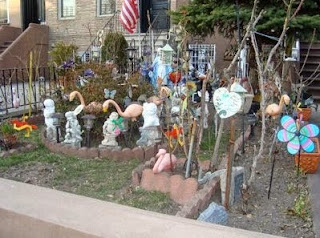
Top 10 landscaping mistakes


It’s that time of year to get outside and landscape. You have an idea of what looks nice, but we all have that neighbor who went overboard. Don’t be that neighbor and take note of some of these landscaping mistakes. 

1.     Excessive lawn ornamentation. Need we say more? Stick to a theme and make sure those ornaments fit the rest of your landscaping design. If you must, sick to one statement, as opposed to ten (or more).

Photo Cred: privateandpublicspace.wordpress.com

2.     Planting in the wrong locations. Many people don’t heed the warnings and read the directions on the plant tags. They’re there for a reason! Make sure you’re planting new items in the right places. HGTV’s Plant Finder is a great tool to double check seasonality, light exposure and hydration needs.
3.     Short grass. It’s a myth that cutting grass shorter will yield less time out mowing throughout the season. It’s actually the opposite, and you can end up doing more harm to your lawn. Exposing too much earth can cause bare patches and dryness, and it also opens the door for insects to make homes.
4.     Incorrect potting. Large planters are all the rage, but it’s easy to incorrectly plant items when you feel like you have a lot of space. Make sure you’re not planting a plant in a pot that’s too large, as it can sink down causing it to get too much water (or the opposite – dry out too fast).
5.     Blotchy lawns. Caused by improper or non-existent fertilization, a spotty lawn can really be an eye sore. Visit a Home Depot, Lowes, or local garden center and ask for a professional’s help with fertilization. Let them know how much (and why type) of sun your lawn gets and what types of fertilizer will work best. Fertilizing should be done at least twice per year, never in the bright sun, and with a good long soaking.
6.     Not taking animals into account. New York is a beautiful place to live, there’s no doubt! But in living in such a lush, green area, we also have our fair share of critters that frequent our properties. From deer to birds to rabbits, each are in search of tasty treats that are easily accessible, so make sure you’re not planting items that they love, otherwise you’ll end up with chewed up green stalks and no color.
7.     Overgrowth. Again citing our trusty HGTV tool, Plant Finder, make sure the plants you choose are the right plants for the areas they’re being planted in. Keep in mind, some plants grow very quickly and can span large areas. While the color may be what you’re looking for, the size may really hinder the overall appearance of your home.
8.     Too. Many. Colors. Pick a color theme and stick to it. Coherence in your color palette will create harmony and beauty, while a cluster of colors will be just that – a cluster. 
9.     Not family-friendly. Some people get carried away with ornamentation themes in their yard for visual appeal, but forget about usability. After all, you’re paying taxes for the land your house is on so you ought to be able to use some of it, right? It’s best to start off with a list of what you want to be able to do in your yard and go from there, design-wise.
10. Sticker shock. It’s easier to start a project than it is to finish it. But sometimes, without proper project estimation, we can get carried away with the cost of finishing the job, leaving it partially or totally uncompleted. Get a budget and estimate together before you get started, so your project gets completed and looks nice sooner rather than later!

Tuesday, April 14, 2015

Low maintenance plants


Even if there’s still snow on the ground, it’s still technically spring, so we are getting in the gardening mood here at Faber Homes! Whether you’re a new family with us, current resident, or thinking about building a new Faber Home, landscaping is probably on your checklist. Curb appeal is not only nice for passerbys, but everyone wants an attractive home on the (inside and) outside. You certainly don’t want to be “that house” with the overgrown, weed-infested lawn.

Don’t have time for a full blown landscaping job this year? No worries. Here are some plants to start you out that are low maintenance and beautiful.  


Photo Cred: homecurbappeal.com

Trees
Velvet Cloak Smoke Tree. Best planted in full sun in the spring or early fall, this small tree has deep purple leaves and can grow to 10-15 feet tall and 15-20 feet wide.

Winter King Hawthorn. If you’re looking to add some shade to your yard, this small flowering tree is perfect. This deciduous tree can grow to a height of 15-20 feet and span a width of 18-20 feet, and its beautiful white cluster flowers bloom in May and then give way to red fruits in the late fall.

Shrubbery
Japanese Barberry. If you’re looking for a quick-growing shrub, the Barberry is perfect. Be sure to watch the plant’s growth, as it can take an area over very quickly (and trim those spent flower stalks as it grows to prevent seedlings). Best planted in the spring in full sun, this plant can grow to 3-4 feet tall by 3-4 feet wide, making it a very suitable solution for quick landscaping.

Elijah Blue. This evergreen ornamental grass has a blue-gray foliage and sprouts blue-green flowers if planted in the spring. Each gathering can grow 8-12 inches high and the same in width. These grasses are beautiful and can even be used to cover less than attractive yard requirements such as power boxes and other utilities.

Flowering Plants
Peony. Known for its large fragrant flowers, the peony should be planted in full sun to light afternoon shade. These plants can grow up to 30+ inches tall and can span 25-35 inches wide. They’re best planted in the spring, so grab some seeds soon!

Endless Summer Hydrangea. This flowering plan is as beautiful as it sounds. Endless Summer Hydrangea begins its season with lime green flowers which then change to pink during the summer. Each grouping will grow to 8-10 feet high and the same in width, so be sure you’re planting this beauty in an area that can accommodate such growth, as it will happen quickly.

Wednesday, July 9, 2014

Keeping Deer Away

If you live anywhere near wooded areas, chances are you’ve seen deer out and about – no matter the season. They’re an annoyance in the winter when they run across the road in front of your car, and they’re a menace in the spring and summer when you’re trying to landscape your property. Before you invest hours of effort into your outdoor abode, there are a few precautions you can take to keep Bambi and his friends away.

Did you know deer can’t stand the smell of humans? We’re not sure why, but we do know that if you sprinkle bits of your hair around your favorite plants, it will help to deter the deer. So the next time you get a trim, bring a bag with you. Deer are also not fans of the taste (or smell) of soap, so take a grater out to your plants and bring a couple bars of Dove out with you.

Deer love hosta, rhododendron, tulips, and roses. They’re beautiful and among the top plants for many homeowners, but unfortunately, deer will be drawn to them like flies to a bright light. Stick to plants with a fuzzy or coarse texture like Butterfly Weed, Bee Balm, or Salvia.

If you must have some of those plants that deer love, you can also try spraying them with hot pepper spray and installing motion sensor lights near where they grow. Both of these remedies are useful in deterring nuisance deer. Sparky can help, too. Allowing your dog to mark his territory (preferably around the perimeter of your property) every few days will help keep the deer away.

If you’ve tried all of these tactics, it might be time for a fence. Deer can clear a 6-foot fence and then feel trapped in your yard (likely causing even more damage). If you can, select an 8-foot fence just to be safe. Be sure to stake the fence into the ground every couple feet, as deer are able to dig if they really want what you have on the other side.

Do you have any other deer-deterring tips to share? We’d love to hear them!

Wednesday, May 21, 2014

Plants to Stay Away From

It’s almost that time of year for gardeners! If you’re new to horticulture, we thought we’d share this list of plants you should stay away from if children or pets frequent your yard.

Rhododendron. Yes, the beautiful purple/pink flowering plant also known as both West Virginia and Washington’s state flower. Swallowing any part of this plant will cause you to drool, cause your eyes to water, and if that doesn’t get you feeling yucky enough, you’ll soon start to vomit. Stay away from this plant if you can.

Hydrangea. Similar to the rhododendron in its use, when swallowed, hydrangea’s poison will cause shortness of breath, fainting, and a rapid pulse. Along with a drop in blood pressure, the plant can cause convulsions and in some cases, death. 


 Lily-of-the-Valley. This plant will make you sick and will even cause you to hallucinate with just one small bite. It has also been tied to cardiovascular issues that have, in some cases, lead to coma and death.

Foxglove. Often used to deter deer (because of its foul taste and adverse affects on the digestive system), the plant, obviously, will not sit will with your (or your pet’s) digestive system. If ingested in large amounts, the plant will lower your heart rate and/or cause an irregular rhythm. Sound fun? We didn’t think so.

Oleander. This pretty white flower has a beautiful scent, but is also extremely deadly, especially to infants and small children. One leaf contains enough toxins to be lethal, as the poison first affects the digestive system, then moves along to the central nervous system. Definitely stay away from this plant.

Mistletoe. While this plant is more common during the holidays, it’s still important to note that all parts of mistletoe are toxic. Not very romantic, indeed. Ingesting mistletoe will cause gastroenteritis and in some cases, cardiovascular collapse. The berries are particularly toxic to pets, so be mindful of fallen berries. 

Water Hemlock. Common all across Northern America in the wild, water hemlock’s poison is so deadly it can be fatal within the first 15 minutes of ingestion.

If you have questions about any flowers or shrubs you’d like to plant around your home, run a quick online search to make sure what you’re planting is safe. The helpful folks in any superstore garden section are also great resources.

Wednesday, May 14, 2014

Cost Efficient Landscaping

Landscaping is a daunting task. You know you want flowers, perhaps some shrubs, and maybe even a spot for a garden. But how expensive is it to get the job done? Obviously, it depends on the project, but there are steps you can take to minimize your trips to the store, and maximize your budget.

First, it’s important to start with a plan. Sketch out your landscape design on engineering paper and know exactly what you need and where you’re going to put each item. 


 Once you’ve figured out your ideal design, go and talk to an expert. A landscape architect will run between $50 and $100 per hour, but it may be worth the investment if you’re inexperienced. If this isn’t your first landscaping job, the experts at your local big box home project store can help you price everything out and make recommendations based on your home. It’s also helpful to bring the site plan for your home so you can put everything into perspective.

When you’re set to start making final purchases, do a little research. Sometimes big box stores won’t carry the items you’re looking for, or if they’re not “in season” you may be paying too much. Items such as lumber for decks is often cheaper during winter months, so be patient if you can afford to be.

Shopping online is also another option for saving money.  Shopping is a little more convenient online, and a bit less stressful when you’re able to search for the exact items you need. Just be mindful of shipping costs and weigh those costs against making the trek to a wholesaler or store for the same item.

Dividing up your projects will also allow you the time you need to do the proper research and plan out your investments. This will also allow you to make adjustments to your plans if you need to, before you go out and buy supplies.

As a last bit of advice, be sure to thoroughly check the quality of all products you receive and don’t be afraid to ask about money-back guarantees. Happy landscaping!

Wednesday, May 7, 2014

Tips for a Green Lawn

Our lawns are more than just decorative pieces to our home. They play host to yard games, picnics, parties, and barbecues for much of the year. The trouble is: how can you grow a lush, green lawn efficiently. 

  
A good first step is to assess the pH level of your land’s soil and know the quantity and availability of nutrients such as nitrogen and phosphorus. This will help you pick the right seed blend and understand what types of treatment your lawn will need to grow to its fullest potential.

Fertilizer can be a tough decision, and there is no cookie-cutter approach to treating your soil and seeds. It’s best to choose a slow-release, organic fertilizer. Be prepared to mow frequently in the weeks following, as the fertilizer really helps to boost growth.

Mowing. Believe it or not, having a functional mower with sharp blades can make a huge difference in your lawn’s growth. It’s a good idea to, during spring and early summer, to sharpen mower blades after each 8-12 hour use-cycle. Dull blades tend to tear off grass as opposed to cutting the blades clean.

One major inhibitor to grass growth is crabgrass. It’s that nasty weed that grows up and out, and never seems to cease growing, no matter how many you try to yank from your yard. Crabgrass begins to germinate around April when temperatures hover around 55-60 degrees. By applying a herbicide specifically designed for crabgrass during this time, you can help you lawn avoid looking like a jungle.

After spring rains when the soil is moist, it’s a good idea to head out and pluck weeds. When weeds (especially those that carry seeds) are wet, there is less of a chance for pollen to spread—and they’re much easier to grab during this time, too. When it isn’t raining, be sure to water your entire lawn twice daily. The best times to water the lawn are in the early morning before the sun rises, and at dusk.

As a last tip to help get your lawn up to par: let it grow. Especially for those homeowners with brand new lawns, it’s best to let grass grow to about three inches and maintain that height for a couple years. Keeping blades at this length will help shade un-sprouted seeds and reduce levels of evaporation.