Tuesday, April 14, 2015

Growing berries in NY


Did you know it’s totally possible to grow delicious berries in your backyard in New York? Many gardeners stick to the veggie staples like pumpkins, carrots, and peppers, but our temperatures are absolutely conducive to growing berries. You’ll want to get started on your garden soon, so here are some tips on growing these yummy fruit.


 Photo Cred: livinghealthyway.com
Start with a healthy soil base. Deep, fertile soil containing high organic matter really helps to set the foundation for a healthy, prosperous garden. The garden site should also have excellent drainage year-round, and be prepared to address early spring frosts.

Weed control is a vital component to growing berries, especially strawberries. You’ll want to get a jump start on the season and plant your berry garden before mid-May, and start immediately with residual herbicides to address upcoming weed sprouts.

Otherwise, berries should be planted 12-18 inches apart on raised beds with around 40 inches between each row. Water daily to ensure adequate hydration, and with proper care, berries will yield about 6 to 7 pickings beginning about a month after the first bloom.

If you desire late-season pickings in the late fall, it’s important to take care of the garden area for cooler temperatures. Mow off leaves close to the ground so the deceased leaves can be replaced, improve access to sunlight, fertilize, place new soil over the plant crown to improve root growth, and apply a dose of herbicides to take care of weeds. Once it does start to get cool, it is recommended that you toss a layer of mulch to minimize frost damage. Just be sure to remove the mulch in the spring of the following year.

Will you spruce up your garden with some delicious berries this year? Let us know in the comments below!

Upcycling furniture


Stop! Don’t throw that old furniture away! We’re about to list off some great tips on how to rehab that old dresser and make it new and functional again – no need to go buy something new when you can recreate something totally unique and beautiful.


You’ve seen them on shows like American Pickers – old giant convenience store signs make for interesting headboards. Just make sure they get a good cleaning first.

Take a drab dresser and turn it into a stylish piece of art. Here are some tips on how to incorporate chevron stripes and add a pop of color to your bedroom. Not a fan of chevron? Here are some tips on how to paint flowers on your dresser using wood ice cream sticks.

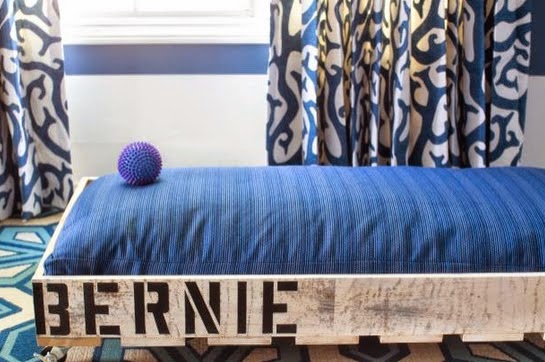
Turn old wood shipping palates into functional dog beds that won’t (completely) tear to shreds.

Photo Cred: HGTV
Find wrapping paper patterns that work for your space and decoupage them on your desk or dresser.

Vintage dressers might seem outdated, but have you ever thought about using one as a bathroom vanity?

Give those drawers a makeover. Paint that old dresser and grab some house numbers and use them as the handles.

Drawers too far beyond repair? Just tear them out and try a new side table design like this one.

Barn wood door turned into headboards can be exquisite. Here’s an example that isn’t too difficult.

Here’s one of our favorites. Grab that big old dresser, give it a paintjob and behold: everyone in the family now has somewhere to store their own shoes, hats and gloves in the mudroom.

Do you have some furniture rehab favorites? Share them in the comments below. Find these ideas and even more on our Pinterest board!

Low maintenance plants


Even if there’s still snow on the ground, it’s still technically spring, so we are getting in the gardening mood here at Faber Homes! Whether you’re a new family with us, current resident, or thinking about building a new Faber Home, landscaping is probably on your checklist. Curb appeal is not only nice for passerbys, but everyone wants an attractive home on the (inside and) outside. You certainly don’t want to be “that house” with the overgrown, weed-infested lawn.

Don’t have time for a full blown landscaping job this year? No worries. Here are some plants to start you out that are low maintenance and beautiful.  


Photo Cred: homecurbappeal.com

Trees
Velvet Cloak Smoke Tree. Best planted in full sun in the spring or early fall, this small tree has deep purple leaves and can grow to 10-15 feet tall and 15-20 feet wide.

Winter King Hawthorn. If you’re looking to add some shade to your yard, this small flowering tree is perfect. This deciduous tree can grow to a height of 15-20 feet and span a width of 18-20 feet, and its beautiful white cluster flowers bloom in May and then give way to red fruits in the late fall.

Shrubbery
Japanese Barberry. If you’re looking for a quick-growing shrub, the Barberry is perfect. Be sure to watch the plant’s growth, as it can take an area over very quickly (and trim those spent flower stalks as it grows to prevent seedlings). Best planted in the spring in full sun, this plant can grow to 3-4 feet tall by 3-4 feet wide, making it a very suitable solution for quick landscaping.

Elijah Blue. This evergreen ornamental grass has a blue-gray foliage and sprouts blue-green flowers if planted in the spring. Each gathering can grow 8-12 inches high and the same in width. These grasses are beautiful and can even be used to cover less than attractive yard requirements such as power boxes and other utilities.

Flowering Plants
Peony. Known for its large fragrant flowers, the peony should be planted in full sun to light afternoon shade. These plants can grow up to 30+ inches tall and can span 25-35 inches wide. They’re best planted in the spring, so grab some seeds soon!

Endless Summer Hydrangea. This flowering plan is as beautiful as it sounds. Endless Summer Hydrangea begins its season with lime green flowers which then change to pink during the summer. Each grouping will grow to 8-10 feet high and the same in width, so be sure you’re planting this beauty in an area that can accommodate such growth, as it will happen quickly.

The time to buy is now


It’s been a buyers market for the last several years, with interest rates at all-time lows, but all of that is about to change, according to many recent reports, including this one from Reuters.

In the article, Atlanta Federal Reserve President Dennis Lockhart states that the U.S. central bank intends to raise interest rates as early as June, barring a significant downturn in the U.S. economy.

Last Wednesday, the Fed moved a step closer to raising rates for the first time since 2006, but downgraded economic growth and inflation projections. The Fed is in no rush to push borrowing costs, however firmer timelines are now being put into place that set increases in motion in our very near future.

So what does this mean for potential buyers? Time is running out. There is much to speculate on when, following the month of June, interest rates will rise, and by how much, but now we know it is coming this summer.

That said, interest rates are currently hovering around 3.93% for a 30-year fixed mortgage, and 3.06% for 15-year fixed. Now is the time to buy, and if you’ve ever considered building a home, the market is in your favor for another two to three months!

Faber Homes maintains several neighborhoods on the West side of Rochester, so if you’re a current resident looking to move, or if you’re moving here from outside the area, contact one of our sales representatives today. We have model homes for every family, including cozy two bedroom ranch floor plans, and four bedroom spacious colonials perfect for growing families. We’ll work with you to ensure your home is built to the highest standards making no compromises to quality, and becomes the home you’ve always dreamed of.

Not sure which type of mortgage is best for you? Our skilled representatives can help set you up with a mortgage consultant from the beginning and walk you through the entire process. Buying a new home can be scary, but with Faber Homes behind you, the process will be seamless and we promise you’ll feel supported through every step of the process.

Monday, March 23, 2015

Home upgrades that really pay off


Building a home is a fun process. You get to pick each and every facet of your home from window placement to cabinet height to hardware colors. You’ll likely opt to upgrade some items in your home, such as vaulted ceilings or stone facings on the exterior of your home. There’s a lot of options, and with Faber Homes, the possibilities are endless, so what will you upgrade while you build, and what will you work on years down the road?

It’s important to understand this distinction when you go to your preconstruction meeting, as there are certain upgrades that are easier done prior to the home being built and other upgrades that will immediately increase the value of your home. If you plan on moving in the next five to ten years, you’ll want to take your home’s resale value into consideration, so we’ve compiled a list of upgrades that will pay off at resale.

Before you build

Modern or updated bathrooms. Glass shower doors that reveal stone tile walls can really help amp up your home value. Also think about the small things like hardware and faucets. The more elaborate and elegant, the nicer your space looks to you and everyone else. Make a single sink a double right away to make your life (and the future homeowner’s) easier.

Modern or updated kitchens. Recessed lights leave room for families to imagine their own taste in the space, as opposed to large light fixtures that are uniquely your style. Stone or trendy glass countertops add value immediately, and are very simple to design around. You cannot put two layers of vinyl over each other, so if you go for vinyl, make sure it’s a neutral color. Otherwise, we recommend laminate, wood, or tile. A complete kitchen remodel later on will run around $30,000 - $40,000 but might only return $25,000 - $35,000 at resale.

Finished basement. Our Superior Walls make it easy to quickly finish a basement, and our overall familiarity with them makes it a very easy process for us. Don’t feel like messing with private contractors who charge an arm and a leg for upgraded spaces? Talk to a Faber representative about the opportunity to have your basement finished while you build.

Natural lighting. It’s hard to estimate how much natural light will come in through our windows before we are in the house. It all depends on where the sun rises and sets. If a room seems to closed-off to you, more windows can open up the room and bring more light in. This upgrade is much less expensive to implement before you move in.

After you build

Landscaping. We’ve all heard of curb appeal. It’s a real thing! Keep it simple with small shrubbery and flowering plants, and opt for a finished paver or poured polished concrete walkway. Don’t be afraid to spend money on perennials, because they come back year after year bigger and healthier (if you take care of them).

Patios, porches, or decks. At Faber Homes, we aim to not only provide you with a beautifully built home, but also a home that’s in an attractive neighborhood on plenty of land. After you move in, think about spaces for entertaining and where you’d like people to gather. That might mean a deck or patio. According to FrontDoor.com, a 16x20 ft. wood deck will run about $10,000 and you should be able to recoup about 90 percent of that cost at resale. Add eye appeal by including spaces for decorative planters.

Allergens in your home


You’ve been cooped up all winter, but with spring on the horizon, it’s time to start thinking about a deep clean of your home. Even in the winter months, allergens can build up, and you might even notice dust flying around if you have pets. Here’s a condensed list from WebMD to keep dust mites and other allergens at bay:

Air
·      Do not use window or attic fans, which bring air containing pollen, mold spores, and other allergens into your home.
·      Use air conditioning so you do not have to open windows. This will help reduce the amount of pollen and mold spores that enter your home.
·      Use an air cleaner with a special high-efficiency particulate air (HEPA) filter. This can help remove some allergens (such as pollen or animal dander) and tobacco smoke from the air in your home.

 Furniture, carpets, drapes, and bedding
·      Avoid carpet, upholstered furniture, and heavy drapes that collect dust. Avoid furniture covered with fabrics. Use pillow and mattress covers made from a tight-weave fabric that keeps out dust and mites.
·      Use furniture made of wood, plastic, leather, or vinyl (including vinyl mattress covers) that you can wipe clean. Note: Vinyl mattress covers can be uncomfortable to sleep on.
·      Remove rugs and wall-to-wall carpeting. Talk with your family about this and about how this will affect family life. If you cannot or do not want to remove carpeting throughout the home, consider removing it only in the bedroom.
·      Use smaller rugs (throw rugs, area rugs) that you can wash.
·      Replace drapes and blinds with roll-down shades or washable curtains.
·      Remove "dust collectors" from bedrooms, such as stuffed toys, wall hangings, books, knickknacks, and artificial flowers.

Cleaning
  • Damp-mop hard floors (tile or hardwood, for example) once a day.
  • Dust and vacuum once or twice a week to remove the buildup of allergens. Use a dry cloth to wipe hard surfaces such as countertops, tables, and other furniture.
  • Vacuum the carpets and cloth-covered furniture to get rid of as much dust as you can.
  • Use a vacuum cleaner with a HEPA filter or a special double-thickness bag, which collects dust-mite particles and pollen. Standard paper bag filters may allow the stirred-up allergens to escape back into the room.
  • Dusting and vacuuming stir up dust, making the air worse until the dust settles. Wear a mask if you do the cleaning yourself. If possible, try to have someone without allergies do the cleaning.
  • Consider wet-vacuum cleaning when possible. This can help remove allergens from carpeting because it actually washes the carpet. Also, consider steam cleaning carpets when possible. In addition to cleaning the carpet, the heat of the steam kills dust mites.

Controlling dust mites
Dust mites are visible only through a microscope. People are allergic to dust mite droppings, not the dust mites themselves. Allergy to dust mites is a year-round problem.
  • Keep the house aired out and dry. Dust mites do well where humidity is greater than 50% but do not do well in dry conditions. Try to keep the moisture level (humidity) below 50%. This may be difficult in some seasons and some climates. Plants and fish tanks add to humidity, so keep these out of the bedroom.
  • Dry vacuuming doesn't pick up dust mites. Consider steam cleaning carpets when possible. In addition to cleaning the carpet, the heat of the steam kills dust mites.
  • You can buy chemicals (ascaricides) that kill dust mites and that you can use on carpeting and furniture. But many experts do not consider them effective enough to be worth the trouble and expense of using them.
  • Wash bedding, including pillowcases and mattress covers, in hot water [130 °F (54.4 °C)] every 1 to 2 weeks. You can also dry bedding at high temperatures.
  • You can limit your contact with dust mites by using allergen-proof covers on your mattress, box spring, and pillows, and washing them regularly. This works well as part of an overall plan to reduce allergens in your home. It is not enough to use mattress and pillow covers without some of the other methods mentioned above.

Top 10 things to do when you move in


No one said moving to a new home was a fun process. What with packing boxes, unpacking boxes, living out of boxes… you get the idea. Not only are you busy settling in, there is what seems like a laundry list of tasks that need done as well. What needs done immediately and what can wait? Here’s a list of the top ten things to do when you move in to a new home.

1. Get your address changed. Or, if you don’t have the time after you move in, stop by your old post office a few days before you move and ask them for the paperwork to get things moving. Don’t forget to contact banks, the BMV, any mailed subscriptions you have to change your address.

2. Contact your local utility companies. We’ll give you a list of phone numbers to call, but in case you misplace it, here’s the nitty gritty: electric, gas, cable, telephone, internet, garbage, water, and sewer.

3. Find your main circuit breaker. Make sure you understand the labeling, and if you don’t, contact your sales representative at Faber and he or she will help explain it.

4. Identify a good place for your emergency kit. It might be the last thing on your mind, but as you move in and hang photos and other things, there are countless opportunities for a minor first aid situation.

5. Identify emergency exits. This seems like a simple one, since you designed your home, but it’s always crucial to understand how you will evacuate should something happen.

6. Check smoke detectors. We will set you up with new batteries, but always be sure to have replacement batteries handy and know how to replace them.

7. Know where your water valve shut-offs are. This will come in particularly handy if you are having a new appliance installed, such as a fridge or washer.

8. From the curb, check your street number. Make sure it’s place visibly on your home so friends, family, and delivery services are able to find you.

9. Update your car registration, voter registration and car registration. Most counties will automatically update your voter registration when you move into a new home, but it’s always good to double check.

10. Make sure people know where to find you! Send out a postcard or email to friends, family and coworkers to let them know where you’ve moved.